Dynjandi Waterfall Weather and Best Time to Visit
Standing at the base of the Westfjords' most famous cascade, the mist will hit your face before you even finish unzipping your shell jacket. The local dynjandi waterfall weather can turn from glassy calm to a driving horizontal gale in under twenty minutes, catching people completely off guard. Most travelers imagine Iceland as cold and wet, which is true enough, but this deep corner of the northwest plays by its own rules entirely.
Planning a trip out here requires more than just checking a general forecast app on your phone. You need to know when the mountain passes are cleared of heavy snow, how the spray behaves when northern winds barrel down Arnarfjörður, and whether you can actually reach the lower parking lot without a raised four-wheel drive. Whether you want wildflowers, midnight sun, or quiet trails with golden moss, timing your arrival makes all the difference.
Book your dynjandi waterfall experience:
Seasonal Breakdown: Understanding Dynjandi Waterfall Weather
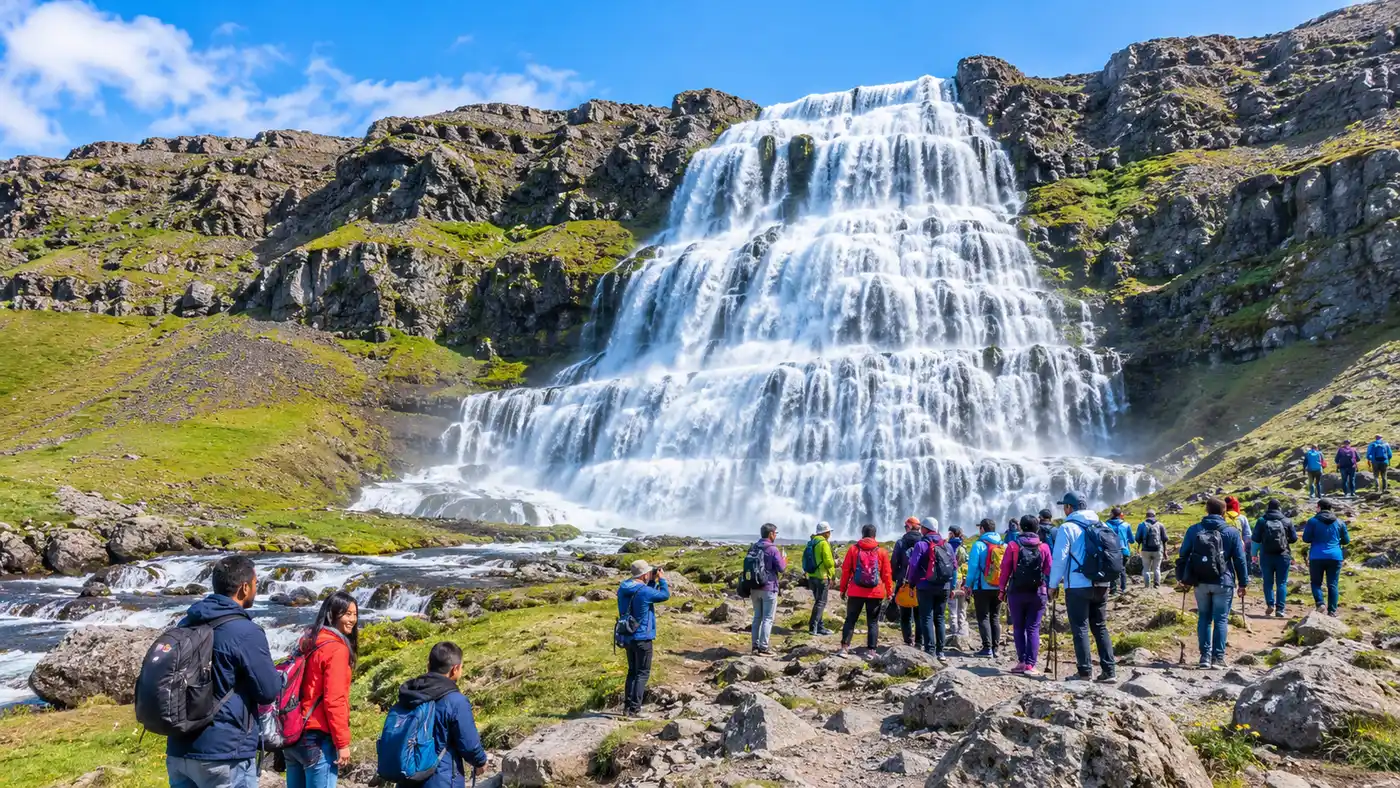
Weather here does not follow a clean four-season model. Locals often joke that you get three months of spring, a few weeks of frantic summer, and eight months of varying degrees of winter. The cascade drops 100 meters down a stepped rock face, widening from 30 meters at the top to 60 meters across the bottom ledge. Because the falls sit tucked into the inner crook of a fjord, mountains shield the site from southern squalls while funneling northwesterly winds straight into the canyon.
Summer brings endless daylight and the warmest air you will see all year. Even so, warm is a relative term in the Westfjords. A typical July afternoon might top out around 13°C (55°F), though dropping down to 6°C (43°F) when the sea fog rolls in is just as likely. If you are planning on driving to Dynjandi during these milder months, Route 60 over Dynjandisheiði pass is generally clear of snow drifts, though loose gravel remains a hazard.
Pro tip: Always check the road administration cameras at Dynjandisheiði before leaving your morning base, as fog on the pass can drop visibility to less than five meters even when the coast looks fine.
By late autumn, rain turns to wet sleet, ice coats the boardwalks, and the river volume shifts dramatically as glacial melt tapers off.
| Season | Months | Avg High Temp | Daylight Hours | Dynjandisheiði Pass Status |
|---|---|---|---|---|
| Summer | Jun – Aug | 11°C to 14°C (52°F to 57°F) | 18 to 24 hrs | Open, gravel conditions |
| Early Autumn | Sep – Oct | 4°C to 8°C (39°F to 46°F) | 10 to 14 hrs | Open, early snow possible in Oct |
| Winter | Nov – Mar | -3°C to 2°C (27°F to 35°F) | 4 to 7 hrs | Closed or unserviced for long stretches |
| Spring | Apr – May | 2°C to 7°C (36°F to 45°F) | 14 to 18 hrs | Opens late May depending on melt |
Summer at the Waterfall: June Through August
Summer is peak season for good reason. The dirt path is completely thawed, birdlife fills the cliffs along the fjord, and the roar of the river is deafening from the sheer volume of spring runoff. You get nearly 24 hours of daylight around the solstice in late June, which allows for some remarkable planning opportunities.
If you visit at two in the afternoon on a Tuesday in July, you might share the parking area with three tour buses and forty campervans. It gets loud. People cluster along the lower viewing platforms taking the same snapshot. If you show up at eleven o'clock at night, the sunlight hangs low and amber across the water, the wind usually settles down, and you will likely have the entire tiered mountain face to yourself.
Here is how to make the most of the summer window:
- Target late evening hours: Arriving after 20:00 guarantees quiet trails, softer lighting for photography, and empty parking spots.
- Pack a bug head net: Midges gather in dense swarms near the damp brush by the lower river on still July afternoons, and they will follow you up the dirt trail.
- Wear true waterproof layers: The tiered design of the waterfall blows mist sideways across the trail, so water-resistant cotton jackets will be soaked through within eleven minutes.
The tundra vegetation along the slopes turns a brilliant, deep green by early July. It feels alive. Just keep in mind that coastal storms can still sweep in from the Greenland Sea without much warning, dragging temperatures down into the single digits even in mid-July.
Shoulder Months: Dynjandi Waterfall in May, September, and October
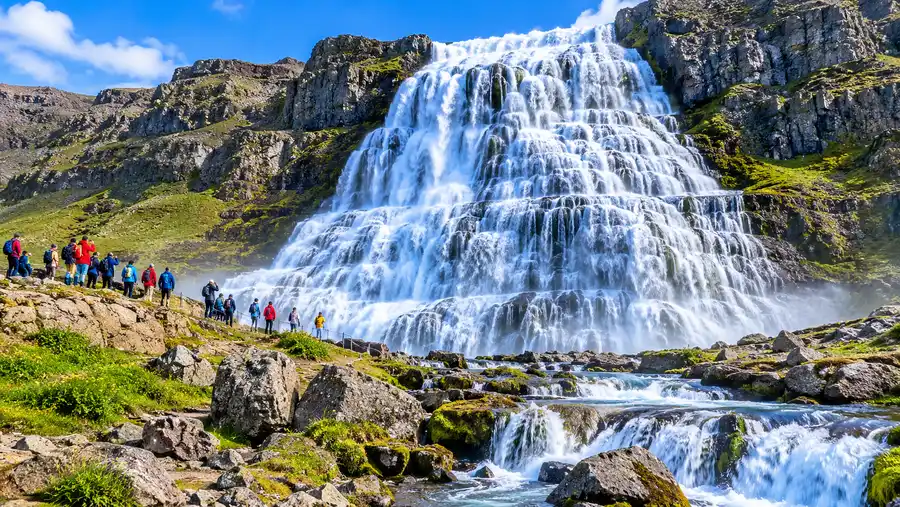
The shoulder season offers a completely different mood. If you visit Dynjandi waterfall in May, you will catch the landscape in mid-waking. Melting snowpack feeds hundreds of temporary rivulets that streak down the canyon walls alongside the primary falls. The main cascade runs swollen and violent. The catch is accessibility. May is tricky because the mountain pass often holds stubborn sheets of packed snow, meaning road crews might only clear it a few days a week, or you may need to take the longer coastal detour through the tunnels to reach the fjord base.
September is my personal favorite time in the Westfjords. The dwarf birch and bilberry bushes turn copper, crimson, and deep mustard yellow. Crowds evaporate almost overnight as European school terms resume. Dynjandi waterfall in September feels rugged and solitary. The air is crisp, usually hovering around 7°C (45°F), and night skies get dark enough by mid-month to reveal the northern lights dancing directly over the tumbling water.
Note: Winter maintenance on Route 60 drops off sharply after mid-October, meaning an unexpected overnight blizzard can leave you stuck on the wrong side of the pass until heavy equipment arrives.
Heading to Dynjandi waterfall in October requires flexibility and a very close eye on the national road conditions map. Freezing rain starts coating the upper wooden steps. Leaves have dropped, leaving the dark basalt rock bare and forbidding. If a low-pressure system blows through, winds easily reach 20 meters per second through the fjord mouth, which makes climbing the upper path uncomfortable or outright hazardous.
Book your dynjandi waterfall experience:
Visiting Dynjandi Waterfall in Winter: Frozen Tiers and Mountain Passes
Winter turns this place into something out of an old folklore collection. Seeing a Dynjandi waterfall frozen into gigantic columns of blue and milky white ice is unforgettable, but getting here is genuinely difficult. Route 60 over Dynjandisheiði is not maintained on a daily winter schedule. For weeks at a time between December and early spring, the high mountain road is impassable, marked closed by the transport authority.
Dynjandi waterfall in November marks the true cutoff for casual road trips. The daylight dwindles to about five hours, slush freezes into jagged ruts on the access road, and snow begins accumulating on the lower tiers. By the time midwinter arrives, Dynjandi waterfall winter travel typically requires a guided super jeep excursion or a chartered boat departing from the small village of Bíldudalur across the fjord. Coming in by sea and walking up from the rocky shore through knee-deep drift snow is an adventure few tourists ever see.
Late winter visits present specific realities you must plan around:
- Dynjandi waterfall in March: Daylight climbs back to twelve hours, but snow levels often reach their absolute deepest on the plateau, keeping mountain roads closed.
- Dynjandi waterfall april conditions: Sun feels stronger, yet freeze-thaw cycles coat the viewing rocks in black ice, making microspikes mandatory for walking.
- Emergency planning: Cell service drops in small pockets near the bottom falls, so you cannot rely on roadside assistance arriving quickly if your vehicle slides into a ditch.
Is a Dynjandi winter expedition worth the logistical headache? Absolutely, provided you treat the region with respect. Seeing the massive bridal veil silenced under a thick crust of sculptured rime ice, with sea water lapping against dark sand nearby, makes summer look almost ordinary by comparison.
Wind, Rain, and What to Wear for Westfjords Weather
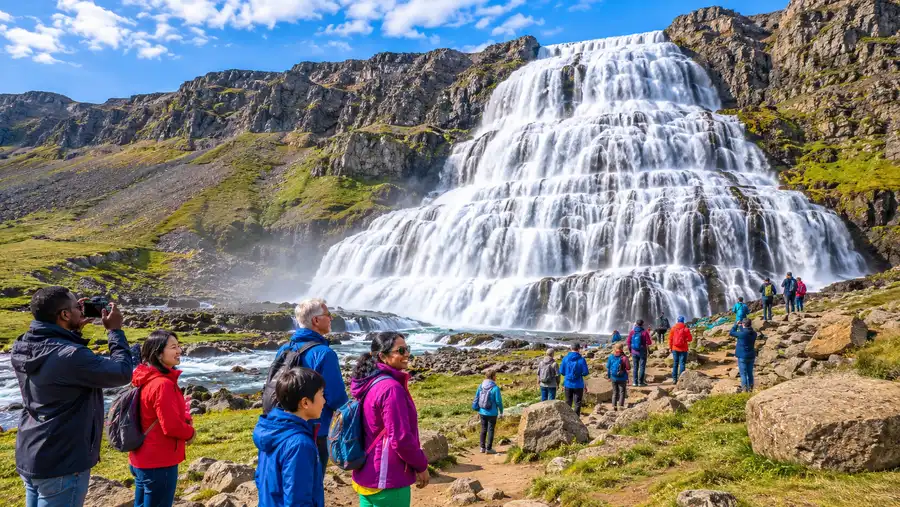
Staying warm out here is entirely about wind deflection. Because you are standing next to an enormous falling volume of water inside an amphitheater of stone, the cascade generates its own internal microclimate. Updrafts pull moisture into the air and spray it outward across the entire Dynjandi waterfall hike path. On an overcast day with ambient winds blowing 12 meters per second, the effective chill factor on exposed skin can sit well below freezing even in late spring.
Leave umbrella attempts at the hotel. The Westfjords wind will invert and shred cheap wire frames in thirty seconds. Instead, lean heavily on sturdy hardshell materials with fully taped seams. Pants should be waterproof rather than merely water-repellent, especially if you plan to hike past the intermediate tiers like Hundafoss and Göngumannafoss to reach the main upper drop.
Stout boots with aggressive rubber lugs are essential. The trail transitions between packed mud, crushed gravel, slick wooden steps, and wet boulders. When descending the switchbacks, mud sticks to flatter soles, causing easy slips. Keeping a dry microfiber cloth in a sealed plastic bag inside your daypack saves your camera lenses, as airborne water droplets collect on glass every three seconds while you frame a shot.
Frequently Asked Questions about dynjandi waterfall weather
What is the warmest month to visit Dynjandi?
July is historically the warmest month at Dynjandi, with average afternoon temperatures reaching 12°C to 14°C (53°F to 57°F). Days with little wind can feel pleasantly mild, though you should still carry an insulating layer.
Can you visit Dynjandi waterfall if it is raining?
Yes, the falls remain spectacular in the rain, and the water volume often looks even more impressive during downpours. You just need quality waterproof jacket and pants, along with good footwear, as the dirt path gets greasy with mud.
Is the road to Dynjandi open year-round?
No, the mountain pass on Route 60 (Dynjandisheiði) closes regularly throughout the winter and early spring due to heavy snow and lack of daily snowplow service. Access between November and late April is mostly limited to super jeeps or boats.
Does Dynjandi waterfall freeze completely in winter?
The waterfall freezes extensively, forming massive blue ice walls and hanging icicles across its 60-meter wide face. However, a strong flow of water usually continues rushing beneath the icy outer shell, keeping the river active below.
Quick Reference
- Prime season: late June through late August
- Average summer temp: 11°C (52°F)
- Dynjandisheiði pass status: closed most of winter
- Footwear needed: waterproof hiking boots with deep lugs
Book your dynjandi waterfall experience:
The Bottom Line
If you want easy driving, reliable road conditions, and long days where you can hike late into the evening, target the sweet spot between June 20th and August 25th. If you prefer fiery autumn colors and quiet viewpoints, aim for the first two weeks of September before the northern passes ice over. Whatever dates you mark on your calendar, pack three more warm layers than you think you need, check the road logs twice a day, and let the unpredictable weather be part of the wild experience.
Read more about dynjandi waterfall.