Dynjandi Waterfall Hike: Trail Guide and Waterfall Tiers
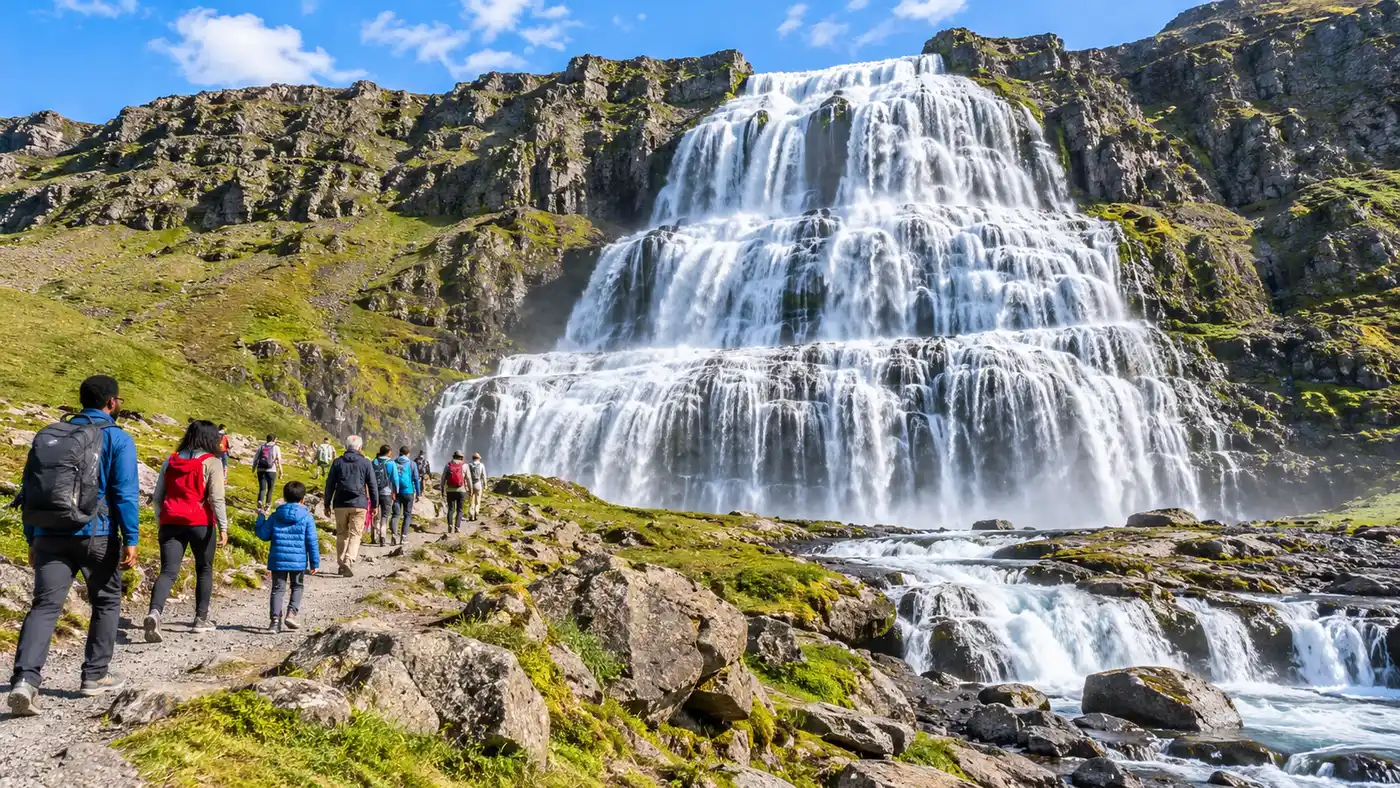
The first view of Arnarfjörður hits you sideways. You round a gravel bend on Route 60, look across the water, and there it is, glued to the mountain wall like a giant triangular fan of spun sugar. Setting out on the dynjandi waterfall hike feels strangely deceptive from the parking lot. The fall looks close, almost painted on the cliffs, but the roar vibrating in your chest tells a different story. You hear it long before you feel the mist.
This is not a long backcountry trek. It is a steady, calf-burning clamber through seven distinct tiers of rushing water, each with its own personality and its own patch of mist. Most people rush straight to the top shelf without looking at what is right under their boots. If you give the trail forty minutes of deliberate attention instead of fifteen minutes of sprinting, it becomes one of the finest short walks in the entire Westfjords.
Book your dynjandi waterfall experience:
The Trail Route and What Your Legs Are In For
The path starts at the edge of the gravel parking area near the edge of the fjord. At first, you are walking on flat, maintained gravel and wood shavings, passing small picnic tables and low birch scrub. That gentle stroll ends after about three minutes. From there, the dynjandi waterfall trail transitions into natural stone steps, packed earth, exposed tree roots, and loose volcanic grit.
You gain roughly 150 meters of elevation across a one-way distance of about 700 meters. It is steep enough to get your lungs working, especially if the wind decides to blast straight down the valley. The park service has added rough rock stairways and wooden handrails in the steepest sections, but plenty of stretches remain raw earth that turns slick as lard whenever rain moves in off the ocean.
Take your time with the footing. You do not need technical mountaineering gear, though smooth-soled city sneakers will betray you within five minutes. If you want a deeper look at planning your route out here, check out our guide on how to get to Dynjandi before setting off across the mountain passes.
| Waterfall Tier | Elevation Level | Key Feature |
|---|---|---|
| Sjóarfoss (Bæjarfoss) | Near sea level | Closest to the fjord and tidal flats |
| Hundafoss | Low slope | Narrow chute running past low birch trees |
| Göngumannafoss | Mid-trail | Famous historic path once passed behind the flow |
| Strompgljúfrafoss | Mid-upper slope | Violent, frothing surge through a deep gorge |
| Hæstahjallafoss | Sub-summit | Broad shelf directly beneath the upper cliff |
| Dynjandi (Fjallfoss) | High plateau rim | Massive 100-meter tiered trapezoid |
Climbing Past the Seven Cascades
What makes hiking to dynjandi waterfall so memorable is that you are not just walking toward a single viewpoint. The Dynjandisá river cascades through a ladder of separate falls, each marked by small, weathered wooden plaques staked into the turf. First comes Sjóarfoss, sometimes called Bæjarfoss, resting quietly near the sea grass. A minute later, Hundafoss spits white water through a narrow rocky cleft.
Higher up, you reach göngumannafoss, which translates roughly to "the waterfall of the walking men." Long ago, local farmers and travelers could duck along a slick sheep track right behind the sheet of water to cross without getting completely soaked. Today, erosion and falling rocks make trying that a terrible idea, but the ledge is clearly visible from the main observation rope.
Above that lies strompgljúfrafoss, where the river constricts into a narrow throat. The water churns into thick foam here, battering against the canyon walls with surprising violence. Right before you reach the final platform, you pass hæstahjallafoss, perched on a high ledge where the water fans out sideways across basalt columns. Standing beside these lower tiers lets you catch your breath while watching Arctic terns dive across the flats far below.
Pro tip: Pause at the wooden overlook near Göngumannafoss on your way up; the afternoon light hits the canyon at an angle that often throws a sharp, double rainbow right across the churn.
Standing Beneath the Crown: Fjallfoss
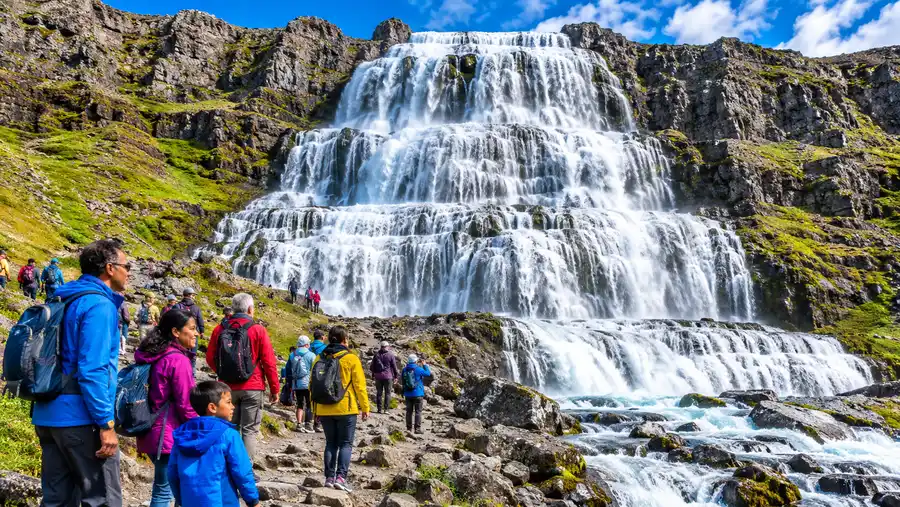
Then you step onto the upper plateau. Dynjandi itself - historically called fjallfoss, or "mountain falls" - opens up above you like a stone cathedral. The scale is difficult to process from images. The dynjandi waterfall height iceland sits at 100 meters, which is impressive enough on paper, but the sheer breadth is what stuns you.
So, how wide is the dynjandi waterfall? It measures approximately 30 meters across at the top edge where it spills over the rim, widening out to an immense 60 meters at the bottom shelf. It looks like a flowing trapezoid of white lace sliding across dozens of ancient lava flows. The sound at the rope line is deafening. You do not hear discrete splashes. You hear a continuous, low-frequency roar that rattles the fillings in your teeth.
The air temperature drops five degrees the moment you step into the spray zone. Even on a clear July afternoon, the downdraft generated by hundreds of tons of falling water creates its own miniature storm system. Your jacket will be wet within ninety seconds.
Note: Stay behind the rope barrier at the upper viewing platform. The wet basalt boulders past the marker are covered in slick black biofilm that will send you straight into the icy meltwater.
Book your dynjandi waterfall experience:
Photography, Drones, and Capturing the Water
Capturing good dynjandi waterfall images takes patience because the spray is relentless. If you bring a camera with interchangeable lenses, do not swap glass on the upper platform. You will end up with water spots inside your camera body before you can twist the mount shut. Wipe your front element with a microfiber cloth, compose your frame quickly, and keep the lens pointed slightly down until the shutter clicks.
Shooting a dynjandi waterfall video requires a sturdy tripod with spiked feet or solid rubber grips. The vibrations through the wet earth can create micro-shakes in long exposures, especially if you are using neutral density filters to blur the cascade. If you are debating when to make the hike for optimal lighting, reviewing Dynjandi waterfall weather and best time to visit will help you dodge the worst of the mid-morning fog.
- Drone restrictions: Flying a dynjandi waterfall drone is strictly regulated by the Environment Agency of Iceland to protect nesting falcons and preserve peace for other hikers. Check posted signs at the trailhead; during nesting seasons, drone flights are banned completely without special permits.
- Shutter speed choices: Set your shutter between 1/4 and 1/15 of a second if you want smooth water texture that still preserves the violent speed of the drop.
- Lens selection: A wide-angle lens between 16mm and 24mm is necessary if you want the full trapezoid and the rocky amphitheater in a single frame from the upper platform.
Trail Logistics, Gear, and Hazards
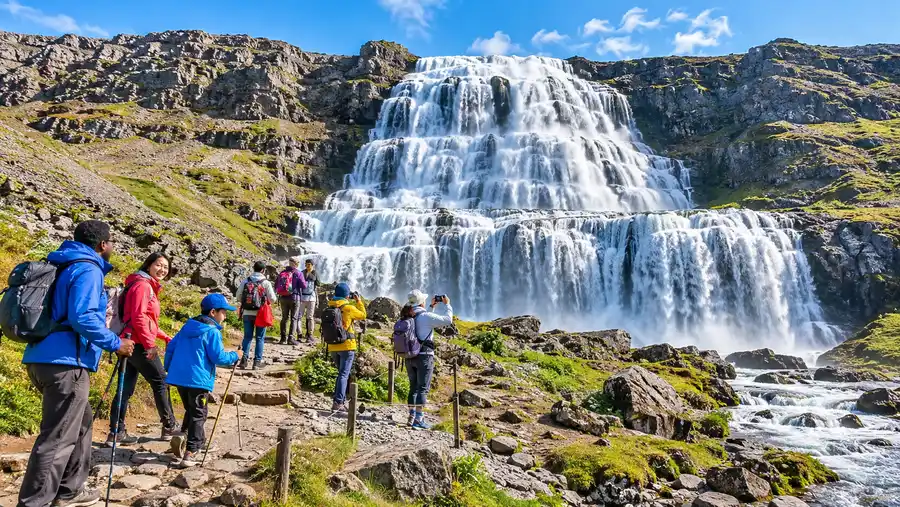
People often treat this walk like a city park path because it is short. That is a mistake. The trail is rugged, often muddy, and completely exposed to the elements. There are no shelters once you leave the parking area, no tree cover aside from knee-high dwarf birch, and the weather changes over the fjord with alarming speed.
Plan on spending around an hour and a half total. That gives you thirty minutes to walk up, thirty minutes to wander down, and thirty minutes to stand in awe, take photos, and empty tiny volcanic pebbles out of your shoes. The trail is free to enter, though parking fees have been introduced to help maintain the timber boardwalks and environmental restoration barriers.
- Sturdy footwear: Wear genuine trail runners or lightweight hiking boots with deep lugs; flat sneakers slide easily on wet clay.
- Waterproof shell: Bring a proper rain jacket, not a flimsy disposable poncho that turns into a sail in the canyon winds.
- Trekking poles: A single pole helps considerably during the descent, saving your knees from the jarring shock of high stone drops.
- Hydration and snacks: Fill your water bottle directly from the clear side streams feeding into the main river below the sheep pastures.
Frequently Asked Questions about dynjandi waterfall hike
How long does the Dynjandi waterfall hike take?
The walk takes roughly 35 to 45 minutes round-trip without stops, but most travelers spend about 90 minutes total to explore the seven distinct tiers and take photographs at the upper deck.
Is the trail suitable for young children?
Yes, children who are used to walking on uneven ground can manage it easily, though parents must hold hands near the drops and keep children strictly behind the rope barriers.
Are there restrooms at the Dynjandi trailhead?
Yes, there are maintained dry or flush toilets located next to the main parking area, which operate during the peak spring and summer travel season.
Quick Reference
- Trail length: 1.4 kilometers out and back
- Elevation gain: 150 meters (rough stone steps)
- Walking time: 45 to 90 minutes
- Trail surface: packed dirt, gravel, basalt stairs
Book your dynjandi waterfall experience:
Worth the Trek?
Reaching this remote pocket of the Westfjords takes hours of driving on twisting coastal gravel, but stepping up to the spray of Fjallfoss makes every rattling mile vanish from memory. It is raw, loud, and delightfully uncommercialized. Lace your boots tight, keep your waterproofs close at hand, and give yourself time to sit by the rushing water before the bus tours roll in.
Read more about dynjandi waterfall.